



Service
Hybrid energy systems: solar, storage, generator
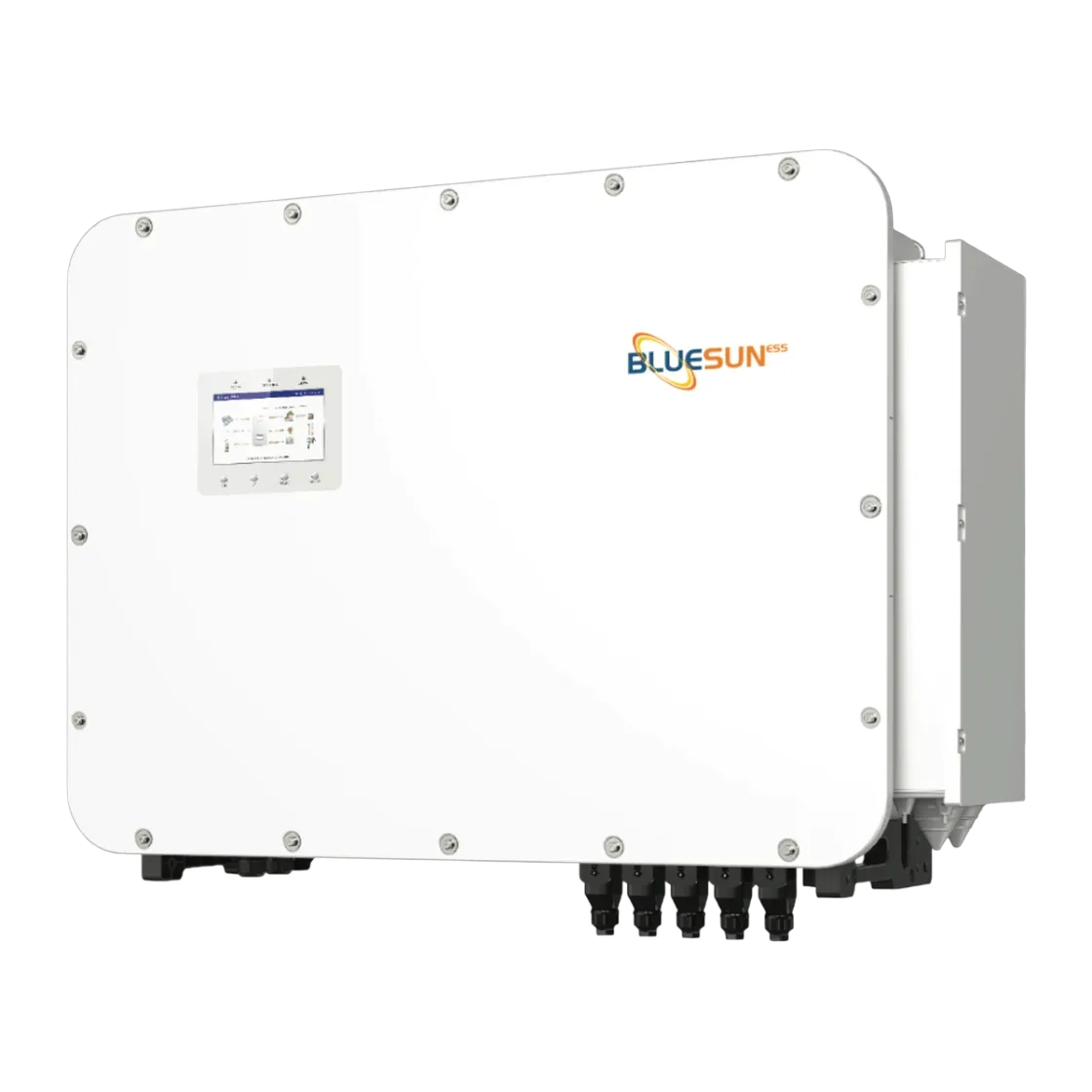
For sites that cannot stop: the sun by day, the battery for switchover and the evening, the generator only as the last reserve. Hybrid inverters from 30 to 125 kW.
- Power
- 30 kW – 1 MW
- Who it is for
- continuous-process manufacturers, agricultural complexes and cold stores, sites with an unreliable grid
What is included
- Audit of critical loads and outage scenarios
- Scheme: hybrid inverter, battery, generator, automatic transfer
- Sizing the battery capacity for the required hours of autonomy
- Design, technical conditions, approval by the grid operator
- Equipment from stock, installation, generator integration
- Setting the source priorities and operating modes
- Monitoring and service
Stages and timelines
Timelines are approximate; the exact ones are fixed in the contract.
- 1 1–4 days
Audit and quote
Critical circuits and the acceptable time without power, configuration of inverters and batteries, the generator's role.
- 2 up to 1 week
Supply
Inverters, batteries and panels from stock, delivery to the site.
- 3 1–5 weeks
Installation
Panels, inverters, battery racks, automatic transfer switch panel, generator connection.
- 4 ≈ 1 week
Start-up
Testing the outage scenarios, setting the priorities, briefing.
- The duration of autonomy depends on the battery capacity and the actual load; we calculate it from the site's specific figures.
When you need it
Wherever stopping the equipment costs more than a backup: cold stores, poultry farms and livestock farms with forced ventilation, continuous production, pumping stations, medical and retail facilities. During an outage a grid-tie inverter shuts down together with the grid, while a hybrid one switches to the battery and panels in 10 ms. The generator becomes the last line and starts only when the battery is discharged and there is no sun.
The scheme
A hybrid inverter with the panels, battery, grid and generator connected to it. By day the panels power the load and charge the battery; during an outage the inverter isolates the site, starts the generator through a dry contact if needed and synchronises with it. For 30–50 kW sites, three-phase hybrids of 30 and 50 kW; for larger ones, 125 kW inverters in parallel. Batteries: high-voltage rack systems on 5 or 14 kWh modules, or PowerCube 16 kWh clusters.
How much battery
The capacity is calculated from the critical load and the autonomy time: a cold store with 30 kW of compressors that must run four hours without a generator needs about 135 kWh, allowing for a 90% depth of discharge. With a generator, the battery can be reduced to 30–60 minutes of operation. The inverter's power is taken from the sum of simultaneous loads, with a margin for motor starting currents, which are three to five times the rated current.
The generator
We connect your existing generator or supply a new one. We set up the automatic transfer switch so that the generator runs at its rated load: the inverter takes the peaks and tops up the battery. Without a generator, the system is designed for full autonomy within the calculated time.
Grid connection
The same procedure as for a regular solar plant: technical conditions, design, approval by the distribution system operator, metering. Surplus is sold under net billing; where export is limited, the inverter runs with zero export.
Examples
A poultry farm with 40 kW of ventilation: a 50 kW hybrid inverter, a 60 kWh battery, an existing 100 kVA generator, 60 kW of panels. A cold store with 30 kW: a battery for 30 minutes and a generator; the panels pay back on the summer cooling peak. A 300 kW workshop on a two-zone tariff: 125 kW hybrid inverters in parallel and a 500 kWh battery that charges at a lower rate at night and shaves the peaks by day. We calculate the configuration from the real load profile.
Supply and service
Equipment from stock, reserved for your site at the contract stage. Installation by our own crew, commissioning with a simulated grid outage and generator start, then monitoring and the manufacturer's warranty, which we handle. For the calculation we need a list of critical loads, details of the generator and a year of bills. We send the scheme and cost estimate within 1–4 days.
Frequently asked questions
How long does it take to build a commercial solar plant?
For a 100–500 kW rooftop plant, it takes roughly three weeks to two months from contract to start-up: 1–4 days for the audit and quote, up to a week for supply from stock, 1–5 weeks for installation and about a week for start-up. A multi-megawatt ground-mounted plant takes longer.
Get a quote
Describe the site and its connection capacity.
- 1 We reply within one working day
- 2 We clarify the site, consumption and the connection capacity
- 3 We send a quote with equipment and lead times within 1–4 days