



Service
Energy storage systems (ESS) for businesses
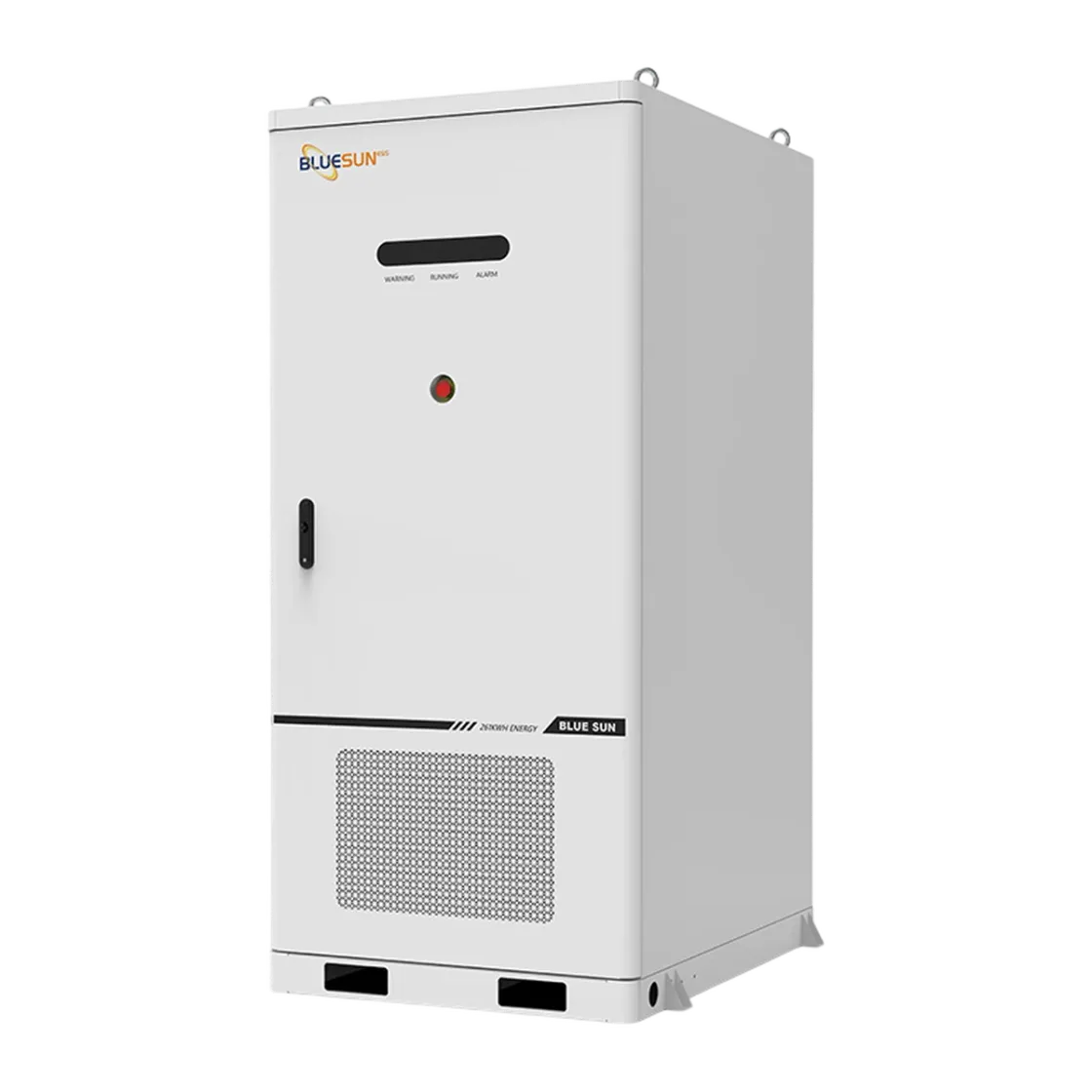
Peak shaving, arbitrage between tariff zones, backup during outages, fuller use of your own solar plant. Cabinets from 100 kWh and containers up to 2 MWh.
- Power
- 50 kWh – 4+ MWh
- Who it is for
- manufacturers with peak loads, sites on a two-zone tariff, solar plant owners who export surplus to the grid
What is included
- Load profile analysis from 15-minute metering data
- Sizing the PCS power and battery capacity for the operating mode
- Design, technical conditions and approval by the distribution system operator
- Cabinets or containers from stock, foundation, cable, switchboards
- Installation, commissioning, integration with the solar plant and the generator
- Setting up the modes: peak shaving, tariff arbitrage, backup
- Monitoring, manufacturer's warranty through the dealer, service across Ukraine
Stages and timelines
Timelines are approximate; the exact ones are fixed in the contract.
- 1 1–4 days
Audit and quote
A year's load profile and the tariff plan: power and capacity, operating modes, savings and payback.
- 2 up to 1 week
Supply
Cabinets from stock, delivery to the site. Containers are made to order, with the lead time stated in the offer.
- 3 1–5 weeks
Installation
Foundation, cable, switchboards, connection of the cabinets. Our own crew and machinery.
- 4 ≈ 1 week
Start-up
Testing, setting up the modes for the actual profile, staff training.
- The timelines are for cabinets from stock; a container made to order has its own delivery time.
- The terms for storage operating on the market and the connection capacity limits are set by current legislation.
Why storage
Four modes that are usually combined: peak shaving, so that you do not pay for exceeding the contracted capacity; arbitrage between the night and day tariff zones; backup for critical circuits with switchover in 10–20 ms; storing the solar plant's daytime surplus for the evening. We calculate the effect on a year of 15-minute metering data, not on averages.
Power and capacity
The converter's power determines how much load the storage takes on, the capacity determines for how long. Peak shaving needs power for the height of the peak and capacity for its duration; arbitrage needs a large capacity with moderate power. In stock: a 125 kW / 261 kWh cabinet with liquid cooling, All-in-One units of 30 kW / 54 kWh and 50 kW / 100 kWh, and 261 kWh battery cabinets. From a megawatt up, containers of 803 kWh and 2 MWh.
Liquid cooling
LiFePO4 cells last longer at 20–30 °C. Liquid cooling keeps the temperature difference between the cells within 3 °C, so a service life of 6,000 cycles or more is achieved in practice. Air cooling is enough for indoor cabinets of up to 100 kWh; for outdoor installations of hundreds of kilowatt-hours we recommend liquid cooling. The 4 MWh system of 2026 is built on exactly these cabinets.
Grid connection and safety
Connection on the AC side, after the main switchboard or in a separate node: protection, metering, approval by the distribution system operator. LiFePO4 contains no cobalt and is not prone to thermal runaway; the BMS disconnects a module when its parameters go out of range. The outdoor cabinets are IP56 and the 125 kW / 261 kWh cabinet is IP66; the containers have fire suppression and sensors.
Timeline and maintenance
Cabinets from stock: delivery within a week, installation together with the foundation and cable from one to five weeks, start-up and setup about a week. Containers are made to order; we state the delivery time in the offer. After start-up: tuning the modes to the actual profile, remote monitoring, scheduled inspections, and we handle the manufacturer's warranty.
Example
A production site with a 600 kW peak and 500 kW of contracted capacity exceeds the limit by 100 kW for two hours every day. A 125 kW / 261 kWh cabinet covers the peak: 200 kWh, 77% of the capacity at a 90% depth of discharge. At night the same cabinet charges at a lower rate, and during an outage it holds a 60 kW critical circuit for about four hours. The figures are illustrative; for your site we use real metering data.
Where to start
Send a year's 15-minute load profile (the operator or your own meter provides it) and your tariff plan. Within 1–4 days we will return the configuration, operating modes, annual savings and payback period. If there is no profile, we will install a logger for a month.
Case study
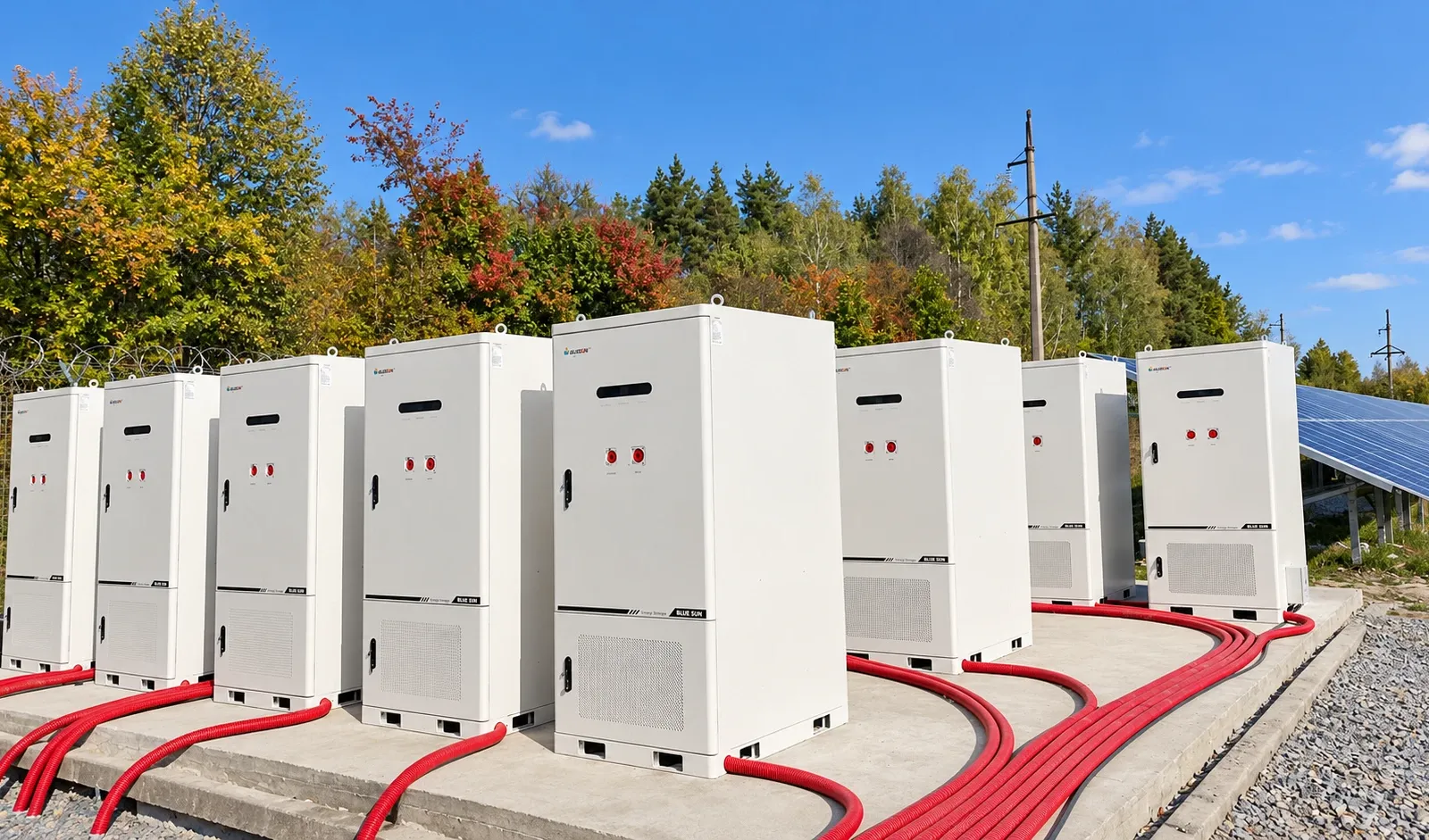
A commercial energy storage system (ESS) of 4 MWh, built on Bluesun cabinets with liquid cooling and assembled in 2026 for a client.
- Capacity
- 4 MWh
- Year
- 2026
- Cooling
- Liquid
Frequently asked questions
What is the payback of a solar plant for a business?
It depends on the tariff, the consumption schedule and the share of generation consumed on site. For a business that works during the day and consumes most of the energy produced, a rooftop solar plant pays back faster than a plant that sells its surplus. Storage adds savings from the price difference between cheap and expensive hours and from peak shaving.
The business calculator will show an indicative payback with the turnkey cost based on your figures. We calculate the exact payback in the quote from your metering data.
Why does a business need storage if it has the grid?
Three reasons. Backup: during an outage production does not stop, with switchover in 10 ms. Tariff: the battery charges at night at a lower price and discharges during the day. Peak: the storage shaves the peak consumption that the business pays for by capacity, and lets it avoid expanding its grid connection.
What if my grid connection capacity is not enough?
First we check whether the connection really needs to be increased: storage often takes off the peak load, and no increase is needed. If it is needed, we prepare the application for a capacity increase, the technical conditions and the design; this is part of the grid connection service.
Where do I start if there is no project yet?
Send a request with the type of site, the city and the connection capacity, and for a business, a year of electricity bills. An engineer will call you, visit the site if needed and within a few days send a preliminary quote with equipment, timeline and budget.
Get a quote
Describe the site and its connection capacity.
- 1 We reply within one working day
- 2 We clarify the site, consumption and the connection capacity
- 3 We send a quote with equipment and lead times within 1–4 days